Edmund Brookes led a group on a village walk around the triangle of roads (Maris Lane, High Street and Church Lane), that were and still are at the heart of the old village.
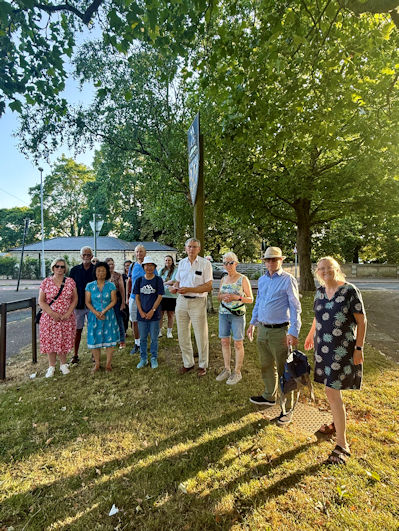
Bringing his experience of 70 years living in the village, Edmund briefed those present on the current and historic use of buildings, including:
- Anstey Hall (formally used the Ministry of Agriculture);
- Waitrose (replacing the Plant Breeding Institute and its glass houses);
- Bidwells offices on the site of the old village pound;
- Trumpington village sign showing Sir Roger de Trumpington on horseback;
- the two previous uses of the Shell petrol station, going back to when H.J. Newell and sons had a boom to serve petrol to cars parked on the main road;
- the Anstey Way shops;
- Gregory’s Chemist/Noel Young Wine Shop replaced by the Bidwells office for the sale of domestic properties;
- the old Whitlocks Yard;
- the offices on the site of the old forge and allotments;
- the Trumpington War Memorial designed and sculpted by Eric Gill.
From the War Memorial the group moved to the parish church where Edmund highlighted the key features of the Grade 1 listed building, as well as briefing on the internal changes planned. The group noted that the current church building dates from 1200–1330 and was substantially renovated by William Butterfield in 1876. Edmund reminded members of the group that the interior is open during the day. There is information about this part of Trumpington on other pages, including the History Trails and the derivation of street names.