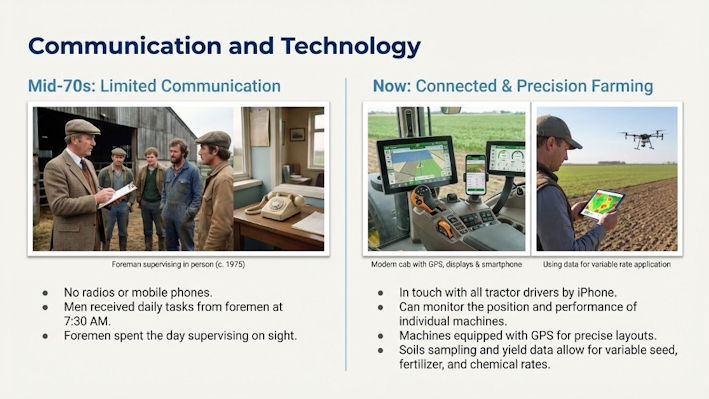
Talk by Antony Pemberton and David Knott
Report by Jo Sear
The meeting held on 19 February 2026 included a presentation by Antony Pemberton and David Knott from the Trumpington Farm Company. They talked about the changes to farming that have taken place over the past 75 years.
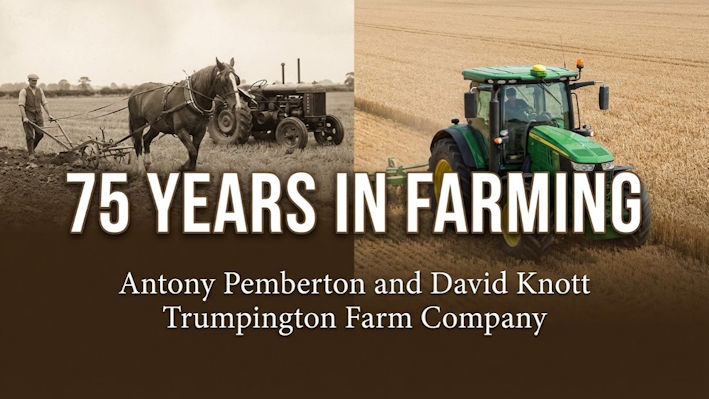
Antony Pemberton highlighted that in the early days of his farming career, the Trumpington Estate operated mixed farming (Figure 1). In particular, there was a herd of milking cattle who were driven across Trumpington High Street four times a day for milking. They would also be driven backwards and forwards to Grantchester.
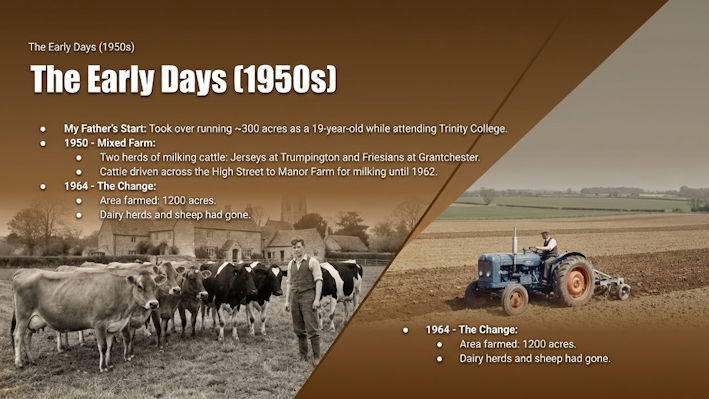
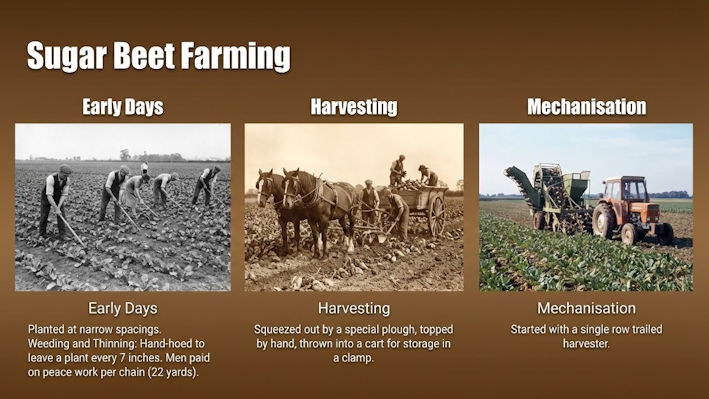
By 1963 the dairy herds were gone and Trumpington Estate focussed on cereal crops (Figure 2). At this time, wheat was still cut using a binder and horses led by hand were used for some tasks. The wheat was sold and the straw was used for cattle bedding. Some herbicides were used, but this was limited until 1979. Sugar beet was also grown (Figure 3) which is still grown on the Trumpington Estate. In the early days much of the work associated with the sugar beet crop was done manually. It was planted by hand, which was slow with men paid piece rates. The beets were harvested using a single-row harvester, but this is now done using a multi-row harvester pulled by a tractor. When the beets were harvested, they were topped by hand.
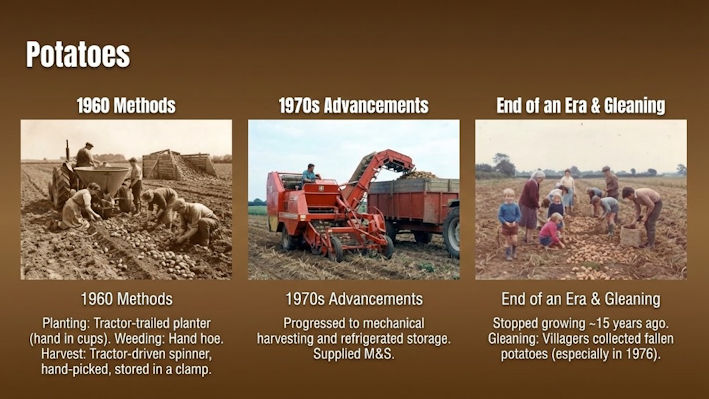
Potatoes were also grown at this time and, again, much of the work was done by hand (Figure 4). The planting, weeding and picking was all manual work. The Trumpington Estate used to supply potatoes to Marks and Spencer and had to meet the company’s very high standards. Most of the potato crop was grown at Clay Farm, as this area had the most suitable soil, but potato farming on the estate came to an end when Clay Farm was developed.
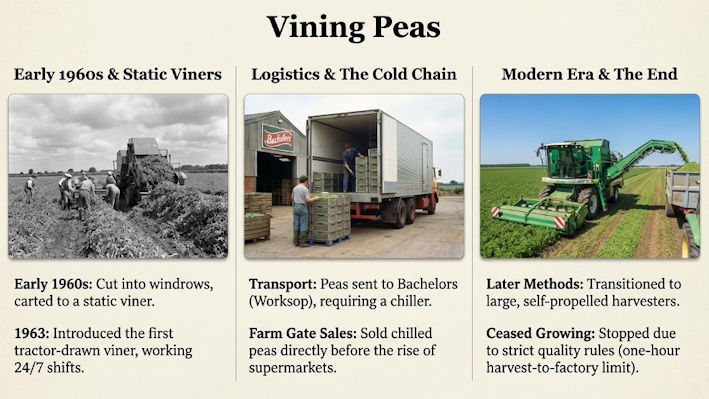
Vining peas have also been grown on the Trumpington Estate since the 1960s (Figure 5). Once harvested, most of the peas were sold to Batchelors who had a factory at Huntingdon at this time, although some of the peas were sold directly by the estate from the farm gate. Pea farming at Trumpington came to an end when the factory at Huntingdon was sold and the peas had to go to Worksop. This was possible, using a chiller vehicle, until it became a requirement for peas to be picked and frozen within an hour.
Oilseed rape has been grown in this country since the Middle Ages, but it became a popular crop in the nineteenth century with the oil used for engine lubrication (Figure 6). It was a very widely grown in the 1970s.
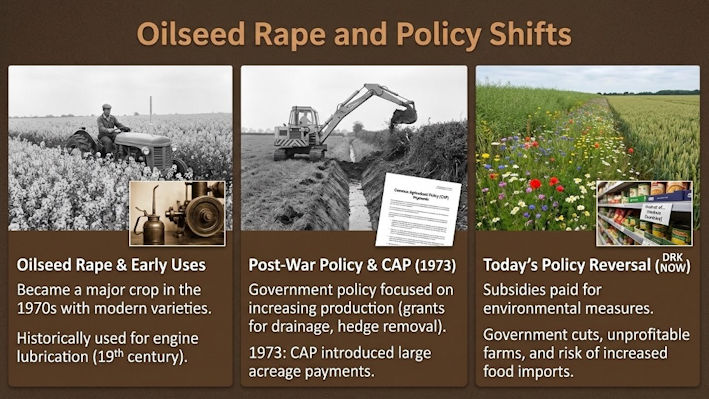
David Knott discussed post-war government policies aimed at farming. In the 1970s, government policy was focused on increasing production, with grants available for drainage and hedge removal. In 1973 the Common Agricultural Policy introduced large acreage payments. Today, this policy has been reversed, with subsidies paid for environmental measures such as ‘set aside’ and for putting land into flower rich margins and areas which provide food for birds over winter. Other government subsidies have been heavily cut, so that many farms have become unprofitable and food imports have risen considerably.
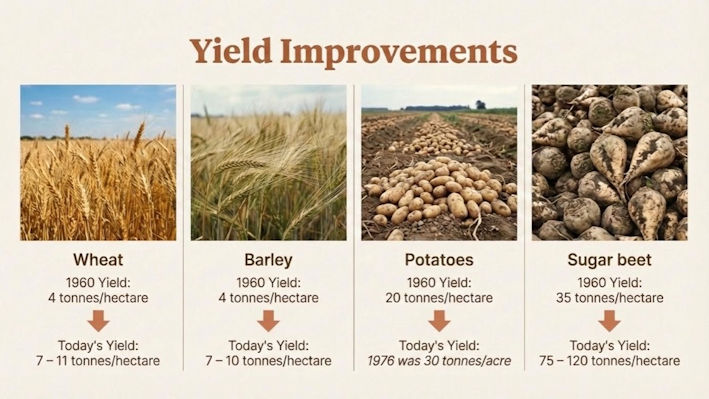
Yield improvements over the past 75 years have been quite considerable (Figure 7). Wheat yields started to increase from around 1979 with the introduction of low-level fungicides and these have been ever increasing. In 1960 the wheat yield was 4 tonnes per hectare; it is now 7–11 tonnes per hectare although levels have now stabilised. Barley yields have increased by a similar amount, although in some instances barley now outproduces wheat. Although they are no longer produced on the Trumpington Estate, the potato yield had increased from 20 tonnes per hectare in 1960 to 30 tonnes per hectare in 1976. Similarly, sugar beet yield has increased from 35 tonnes per hectare in 1960 to between 75–120 tonnes, with this year’s harvest at the Peterborough farm bringing in 120 tonnes per hectare. The Trumpington Estate had a close relationship with the Plant Breeding Institute when this operated in Trumpington. This involvement was particularly instrumental in increasing wheat yields on the estate.
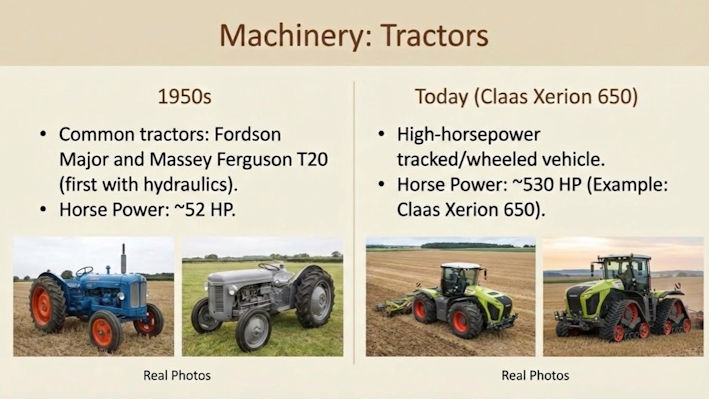
Farm machinery has also undergone huge changes over the past 75 years (Figure 8). When heavy horses disappeared from farming they were replaced by small tractors. Over time, these have been replaced by tractors which can be up to 530HP and operate using either wheels or tracks. These can move across various terrains quickly and efficiently.
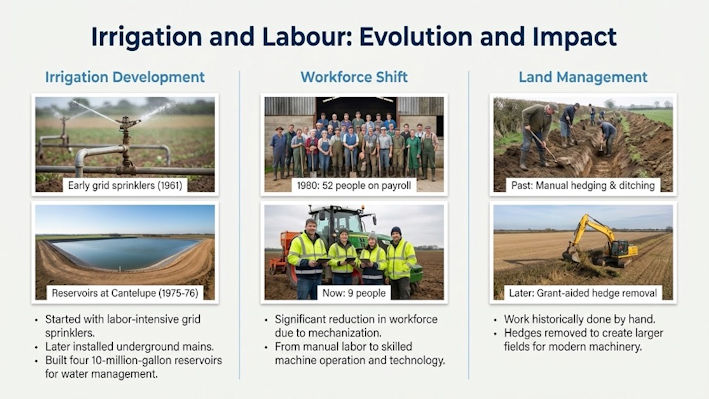
Crop irrigation has also seen big advances in the past few decades (Figure 9). Grid sprinklers were introduced in the early 1960s which were hugely labour intensive until the installation of underground mains. In addition, four 10 million gallon reservoirs were constructed in the 1970s, which were at a higher level so that the water could feed down to lower levels. These are no longer in use and the reservoirs are used for fishing. Mechanisation has also had a significant impact on the labour force: in 1980, 52 people were employed to farm the Trumpington Estate and now just nine people are responsible for an area twice the size.
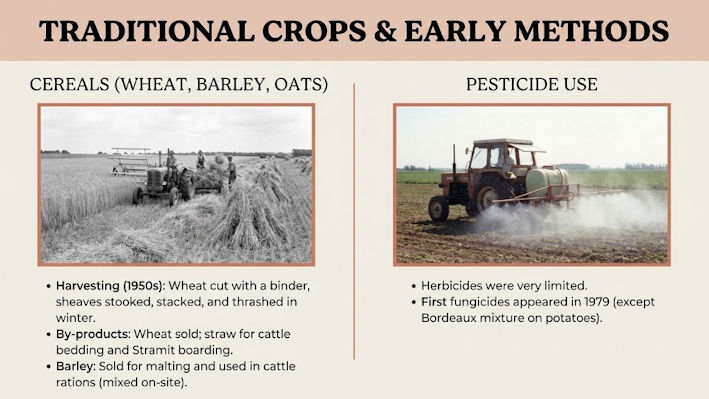
Communication and technology has seen significant progress (Figure 10). In the mid-1970s, the labour force would arrive on site at 7.30 am to received direct, face-to-face instructions from the farm foreman. Now, radios and mobile telephones mean that members of the workforce can stay in contact with one another remotely. A modern tractor cab is equipped with GPS, data displays and a smartphone. Data is collected which allows for seed, fertilizer and other chemicals to be applied efficiently and effectively and drones are used to identify and map any problems with the crop so that fertilizer can be added as required. Satellite imagery is also used. As a consequence, the operators of modern farm machinery are in effect computer operators and not really tractor drivers as had been the case previously. As the task is less physical, the operator can work for much longer without getting tired. However, it was anticipated that driverless tractors would be in operation within ten years and the tractor would simply drive itself with direction from the farm office.