Andy Robinson (Future City), gave a talk about the public art features in Hobson Square and the Clay Farm Centre, at the Local History Group meeting on 22 March 2018. There was also a talk by Tom Phillips about the archaeology of Clay Farm. This was one of three events held in the Clay Farm Centre before its opening in April 2018. Report by Andrew Roberts, with thanks to Andy Robinson and Heather and Ivan Morison.
Andy Robinson explained that Future City had been involved with the major public art projects for Clay Farm and the Cambridge Biomedical Campus since 2010-11. Andy had been following the local archaeology projects, including attending the Local History Group talk by Richard Mortimer in March 2012, which he had videoed for reference by the artists.
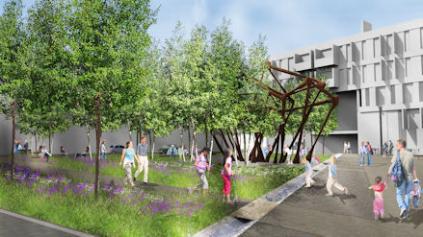
The designs for Hobson Square dated from 2014, with the art project as an integral component from an early stage. The project included landscape designs and the art commission which was awarded to Heather and Ivan Morison. The ideas included respecting Bronze Age field boundaries and responding to the arrangement of Bronze Age post holes that were found on site during the Clay Farm excavation.
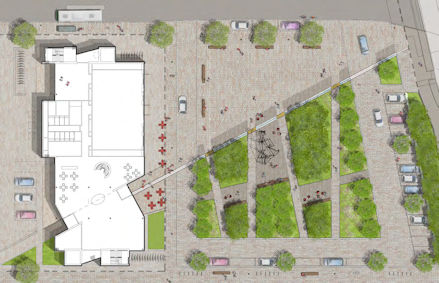
The rill across Hobson Square and the entrances into the Clay Farm Centre were set at a diagonal, inspired by the orientation of the Bronze Age ditches. The designers of the Square were asked to create a space for civic events and also a green feeling and the rill was an effective device to mark the interface between these two zones.
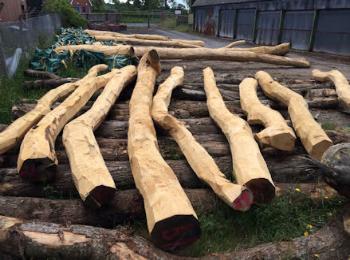
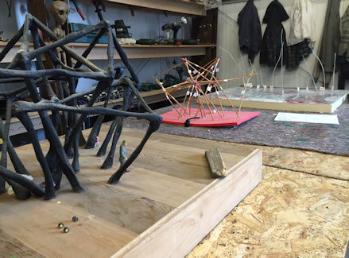
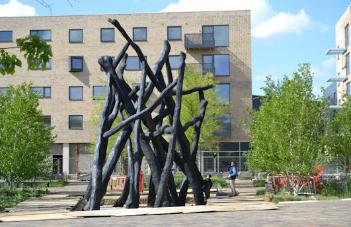
Heather and Ivan proposed a sculpture in Hobson Square based on the layout of a group of post holes. Their vision of a large scale timber structure was on a scale to match the surrounding architecture and the proposed planting and silver birch trees in the Square. Andy said that Heather and Ivan worked up their ideas in a series of models. They had to do extensive research into the concept, including investigating how to join natural timbers in a robust way. It proved time-consuming to find suitable timber, but they eventually found a landowner in Snowdonia, where there were chestnut trees that had been blown over during a storm. They spent a year organising the removal of the timber and its transfer to their workshop in Herefordshire.
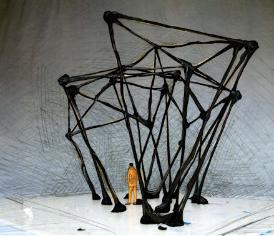
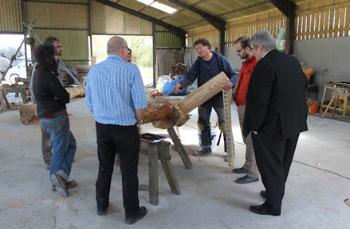
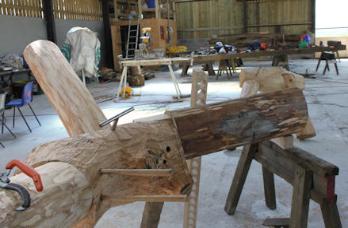
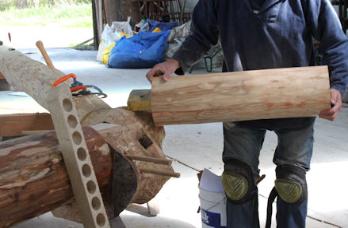
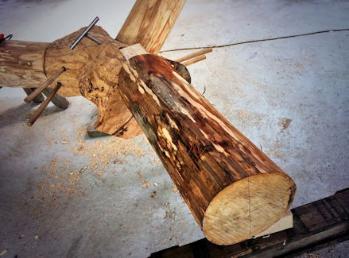
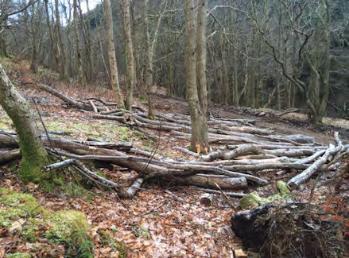
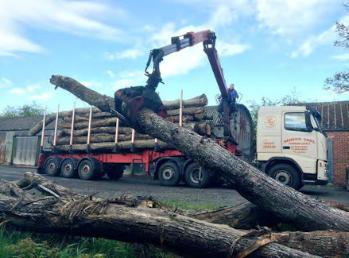
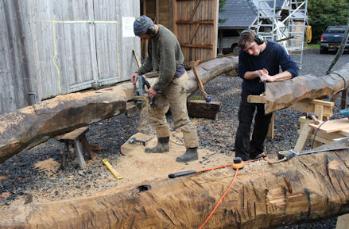
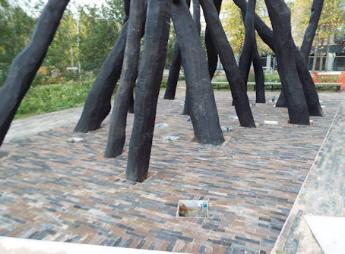
The softer wood was stripped back with a chainsaw. They catalogued the resulting timbers and remodelled the design based on the available material. Heather and Ivan then worked with specialists to produce a further revision. The timber was moved to another site for testing and further work on the joints, then the design was approved by structural engineers. During the process, the timbers were blackened to make them more durable. This is based on techniques used in Norway where the timber in stave churches and other buildings are treated with tar from burnt pine trees.
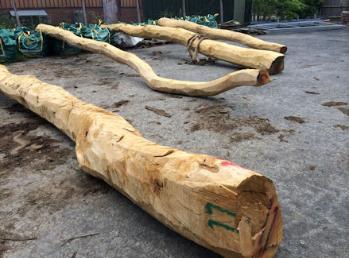
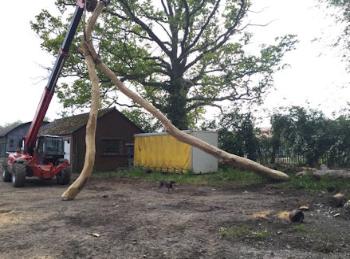

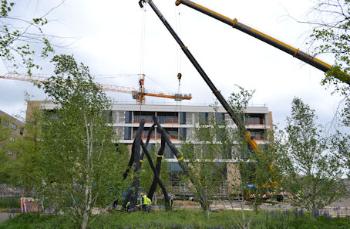
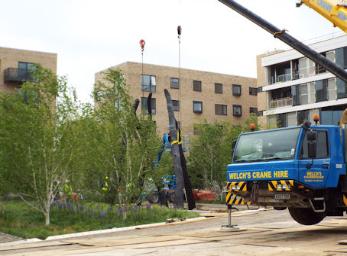
The ‘Bronze House’ artwork was brought to Hobson Square and installed in May 2017. Further work was then done on the blackening of the timbers. The final work on the Square was now in hand (March 2018), including installing uplighting on the sculpture.
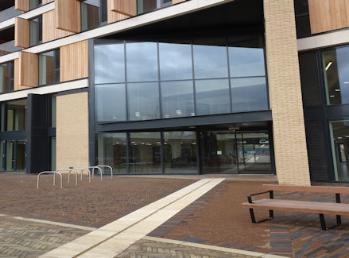
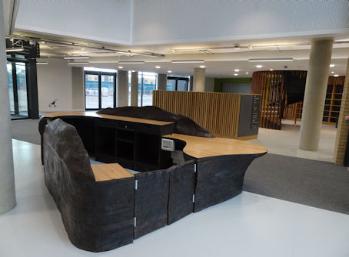
Andy added that Heather and Ivan Morison were also awarded the public art commission for the Clay Farm Centre. This involved developing the reception desk and the spiral staircase from the Ground Floor to the First Floor, using designs which respond to the structure in the Square. They incorporate Douglas fir as the black elements and beech to form the surface of the desk.
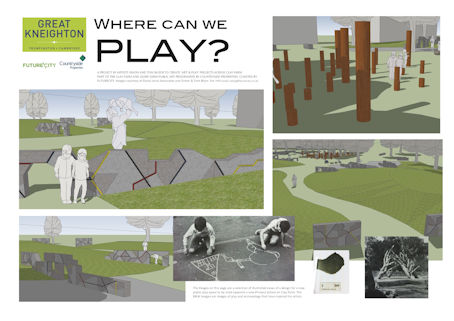
Elsewhere across the Clay Farm and Glebe Farm developments, Andy said that the artists had designed play areas to include motifs based on pottery and other archaeological finds.
Andy is looking into how best to archive the information about the project within the Clay Farm Library.
In response to a question, Andy said that the budget for the Bronze House art work was £130,000.