This is the first part of the history of Trumpington Village Hall. For an introduction to the series, see History of Trumpington Village Hall.
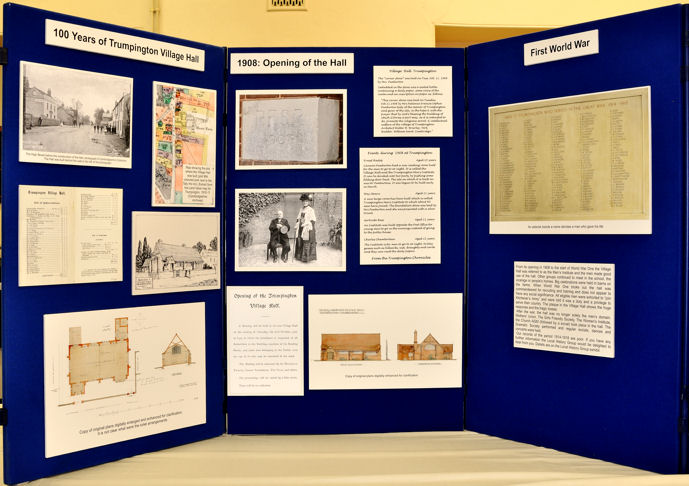
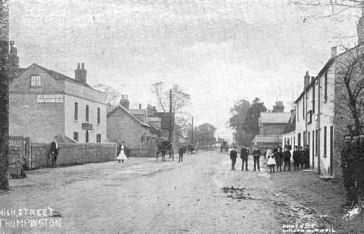
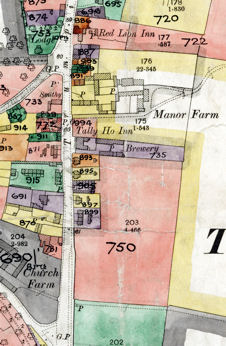
In the early 1900s, Trumpington was still a separate village on the outskirts of Cambridge. In an article in the Cambridge Evening News, 20 October 2008, Mike Petty recorded that the idea for a hall started to take shape when a parishioner, Mrs Mansfield, left money in her will for the benefit of the village.
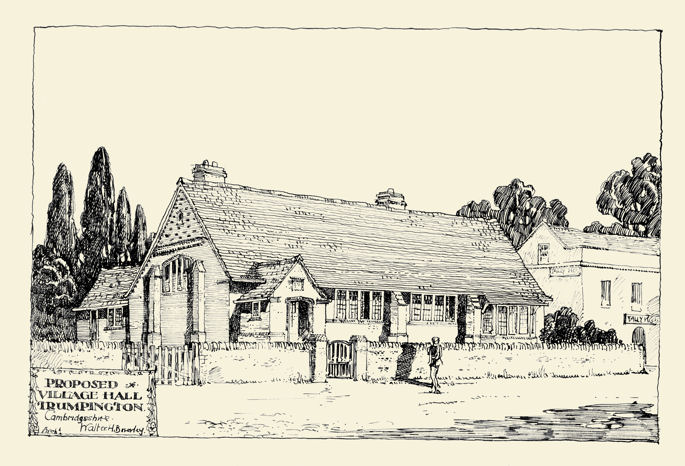
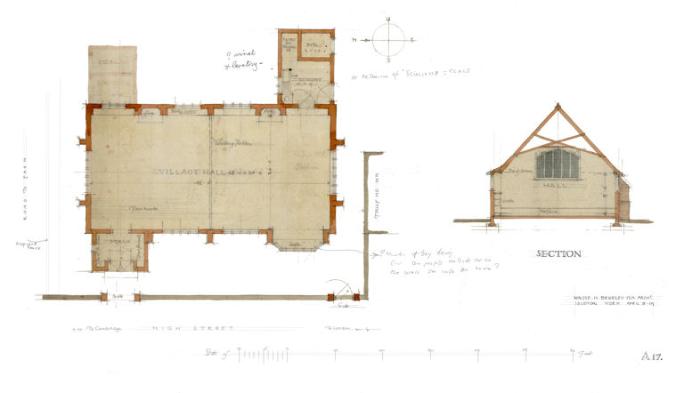
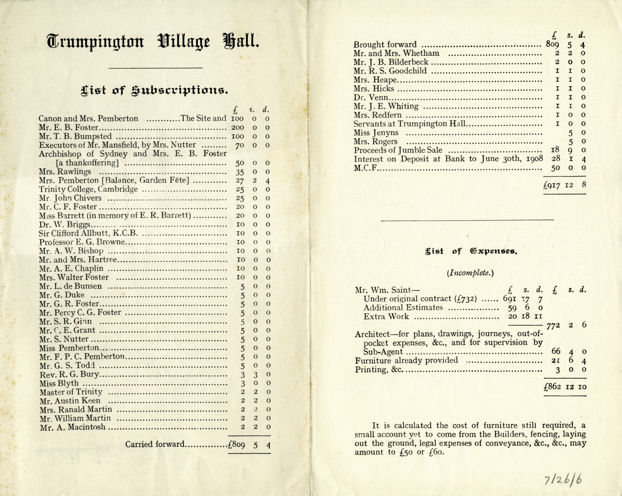
The York architect Walter Brierley was chosen and consented to design the village hall, through his connection with Canon Pemberton, who donated the land and started the subscription list for the hall with a donation of £100, followed by £200 from E.B. Foster and various sums from others including the Archbishop of Sydney. Canon Pemberton was a regular visitor to York music festivals and the father-in-law of Winifred Pemberton (née Worsley), who hailed from Hovingham near York.
Walter Brierley was a noted architect based in York, known as the Yorkshire Lutyens , responsible for over 300 buildings in the north between 1885 and 1926 (schools, churches, houses, etc.). There was an exhibition of his work at the University of York in 2007, where his archive is at the Borthwick Institute.
There was a page in the Property section of the Daily Telegraph, 27 September 2008, about Walter Brierley, whose own 1905 home was on the market in York. Clive Aslet wrote that Brierley was said to be an ardent advocate of local style, but in Edwardian architecture that was a code for an Arts & Crafts influence. He wrote that the York house is not flamboyant, but the craftsmanship and attention to detail are outstanding.
In Trumpington, the original building consisted of the current main hall, with a scullery, broom cupboard and coal store to the rear right. There were no internal toilets.
Continue with the next part of the history of Trumpington Village Hall.